Preparing for an English-Language Endocrinology Appointment in Thailand
A useful endocrine appointment packet helps the clinician understand your concern without searching through an unlabelled pile of files. Start with a short account of what changed, keep the supporting reports identifiable and confirm how the conversation will work in English or with an interpreter.

Put the reason for the visit before the document collection
AHRQ’s appointment guidance recommends preparing questions, medicine information and relevant history. Write the main concern in ordinary language, then add a few dated events that explain why you are seeking assessment. Separate a previous diagnosis from a symptom or a possibility you want the clinician to consider.
Keep current prescriptions, nonprescription products and supplements identifiable. A useful summary can say “date uncertain” or “previous report requested.” Filling gaps with guessed dates makes the packet look complete while making the clinical history less reliable. The original records should remain available behind the summary. [1]
For a focused first pituitary discussion, use the general preparation ideas in Preparing for a First Adult Pituitary Appointment
If the visit concerns possible GH deficiency, the broader assessment context is explained in HGHThai’s consultation-preparation guide
Give each file its own status
Samitivej’s preparation guidance asks patients to bring relevant medical records and imaging materials. It is an example from one provider, not a rule that every Thai service uses the same intake process. Ask your receiving team which records, formats and languages it needs and which secure route to use.
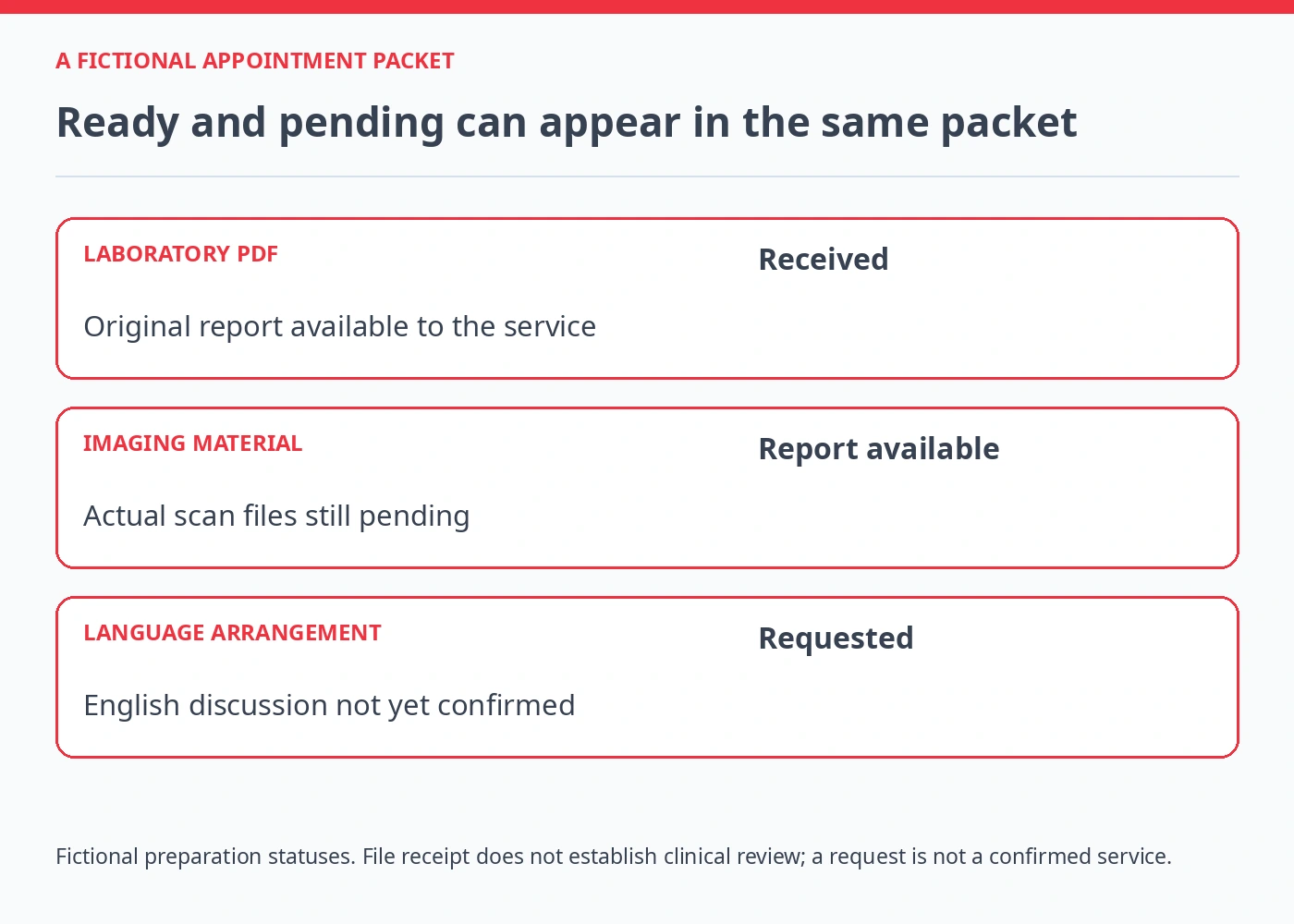
An imaging report is the written interpretation; the actual scan files are another item. Likewise, a file being sent does not establish that it arrived or can be opened. A brief inventory can distinguish those stages before the appointment, when there is still time to clarify a missing or unreadable attachment. [2]
If the service sends a quotation with the intake details, clarify the quotation for tests and follow-up so a completed test is not mistaken for an included result-review appointment.
A short packet with a visible unfinished item
This fictional preparation record does not describe a real patient or a required test panel.
| Item to check | Example record | What it establishes |
|---|---|---|
| Reason for visit | Concern described in a short dated summary | The question to discuss, not a diagnosis |
| Medicine list | Current names recorded; one start date uncertain | Known information and its limit |
| Laboratory report | Original PDF sent; receipt confirmed | Document reached the service |
| Imaging report | Written report available | Does not imply scan files are included |
| Scan files | Requested from the earlier provider; still pending | A separate unfinished item |
| Language | English discussion requested; arrangement awaiting confirmation | A request is not a confirmed service |
The packet can be useful before every item is complete
In the fictional packet, the written imaging report is ready but the image files are pending. The next useful action is to ask the receiving team whether that affects the planned visit and how the files should be transferred. Renaming the whole packet “complete” would conceal the issue rather than solve it.
The same applies to language support. A booking note that says “English requested” should become a confirmed arrangement only after the service replies. This leaves the clinician and patient with a shared understanding of what will be available.
Prepare for understanding, not just attendance
UK interpreting guidance distinguishes everyday language ability from understanding health information. That communication principle is useful when booking in Thailand, but UK service entitlements do not transfer to a Thai hospital. Ask about the actual appointment language, interpreter arrangements if needed and any associated charges.
Choose a few priority questions and ask for unfamiliar explanations to be clarified during the visit. Before leaving, repeat the next step in your own words and invite correction. The packet supports assessment and communication; it does not guarantee a particular test, diagnosis or prescription. [3]
For the role of an interpreter during the visit, read Working With an Interpreter During a Hormone-Care Appointment
Before finalizing the appointment arrangement, check the clinic and clinician identities, keeping the actual premises, practitioner and claimed specialty separate.
The receiving service sets its actual intake requirements
No Thai clinic’s English-language availability, referral policy or endocrine service is guaranteed. Confirm the arrangements with the chosen provider.
Sources and reading context
- AHRQ preparation for healthcare appointments — Organize concerns, questions and medicines for discussion
- Samitivej medical-history preparation — Provider-specific records and imaging preparation, not universal Thai intake requirements
- UK language interpreting and translation guide — Communication principles only; NHS rights and free-service rules are not Thai entitlements