Working With an Interpreter During a Hormone-Care Appointment
An interpreter can help you take part in the medical conversation, but the arrangement needs more detail than a language name on a booking form. Confirm the language or dialect, the appointment setting and what written information you will receive. Understanding the next step matters more than simply getting through the visit.
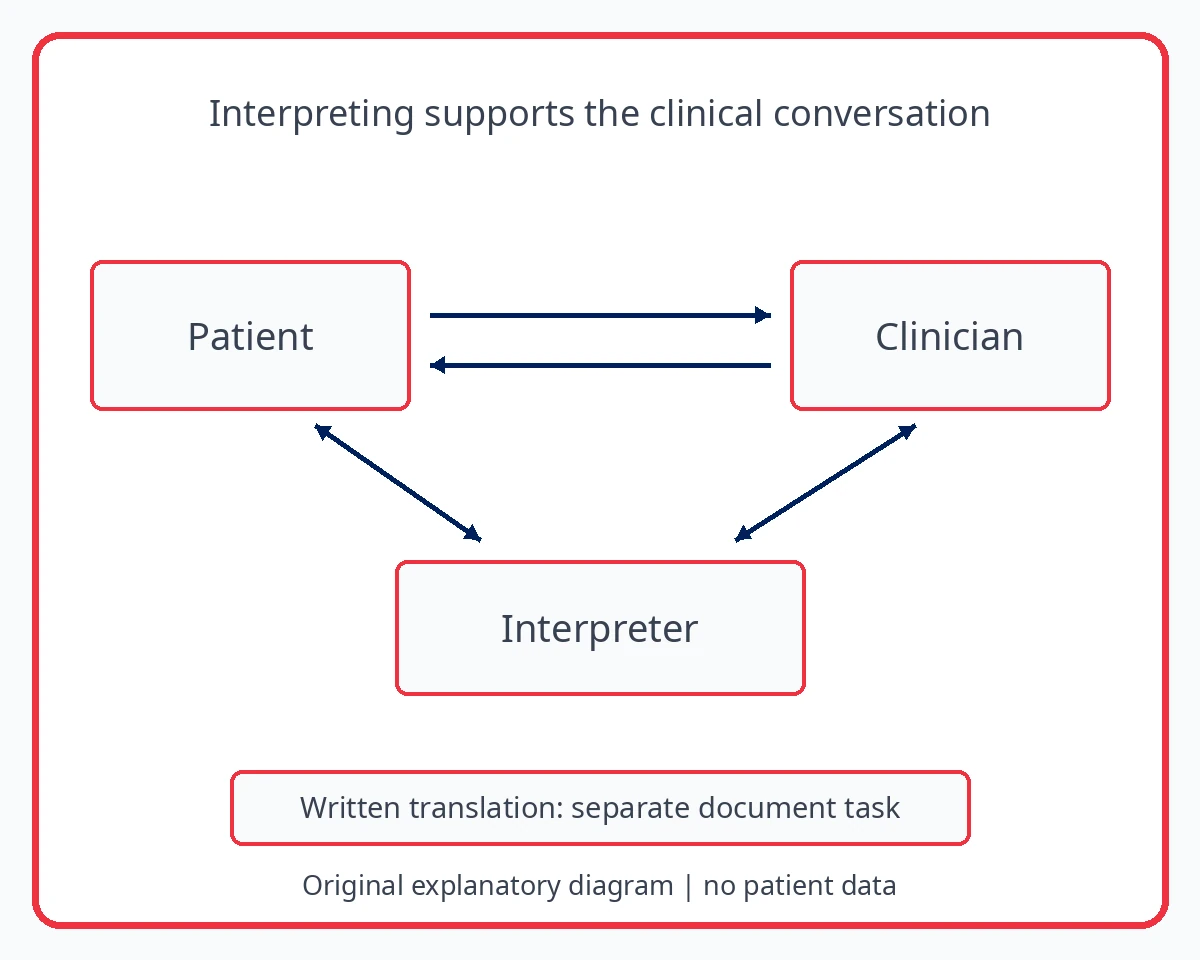
Describe the communication need when booking
UK language guidance recommends identifying language and dialect needs and distinguishes spoken interpreting from document translation. These communication principles can guide questions to a Thai service; they do not create UK service entitlements in Thailand. Say which parts of the conversation are difficult rather than assuming everyday English fluency covers medical explanations.
Samitivej lists interpreter services as a provider example, with conditions that differ for some arrangements. Ask the actual service about availability at your appointment time, any charges and the support appropriate to the discussion. A website’s general language list is not a confirmation of your individual booking. [1] [2]
Arrange communication as part of the appointment packet in Preparing for an English-Language Endocrinology Appointment in Thailand
Confirm whether the interpreter arrangement covers pharmacy questions or a later result discussion, or only the booked consultation.
Use short turns and speak to the clinician
The UK guide recommends speaking directly to the patient or clinician and allowing short, clear turns to be interpreted. Bring a few priority questions and take one observation at a time. If an unfamiliar term remains unclear after interpretation, ask for an explanation in ordinary language rather than pretending the word now makes sense.
The interpreter conveys the conversation; clinical advice comes from the responsible professional. Leave room for pauses and corrections, including when a date or the name of a medicine has been misunderstood. A smoother conversation is useful only if the meaning remains accurate. [1]
Turn an uncertain “yes” into a check of understanding
This fictional exchange illustrates communication. It is not a clinical instruction or a promise about a provider’s interpreter service.
| Preparation item | Example status | What still needs attention |
|---|---|---|
| Booking | Language requested; appointment arrangement confirmed separately | Do not infer a booking from a general website list |
| Patient question | “Is the result-review appointment separate?” | One question at a time |
| Initial understanding | “I think I need to book it myself.” | State the interpretation openly |
| Clarification | Clinic booking team will arrange the review; patient need not book separately | Record the actual answer |
| Written information | Language and availability still to confirm | Interpreting does not automatically translate every document |
Repeating the plan gives the team a chance to correct it
In the fictional exchange, the patient says, “I understand that I must book the review myself; please correct me if I misunderstood.” That exposes a practical uncertainty the word “yes” would conceal. The clinician clarifies that the clinic’s booking team will arrange the review, so the patient does not need to book it separately. The interpreter conveys that answer.
The final note records the booking team’s responsibility, replacing the patient’s first guess. If the answer is still uncertain, keep the responsible contact and question visible. The purpose of repeating the plan is to find and fix misunderstanding, not to test the patient.
Ask separately about the written record
A spoken interpreted visit does not automatically produce translated reports or instructions. Ask which documents will be provided, in what language and how to request clarification later. Keep originals identifiable alongside any translations, including who supplied them and their status.
Before leaving, make sure the next action, responsible team and contact route are understandable. This article helps prepare communication; it does not certify an interpreter, guarantee a free service or replace the clinician’s explanation of an actual care plan. [1]
For reviewing written medicine information in another language, read Reading Medicine Information in a Second Language: A Patient Checklist
Language support needs an actual confirmed arrangement
No Thai entitlement to free interpreting or universal interpreter qualification is asserted. UK communication guidance is not transferred as a Thai service rule.
Sources and reading context
- UK language interpreting and translation guide — Communication principles only; NHS rights and free-service rules are not Thai entitlements
- Samitivej language and interpreters — Provider-specific example; no universal availability, free-service or language guarantee